Fast delivery
Global supplier
Innovative solutions

Premium Battery Rack Solutions | Durable Steel ESS Storage for 2026 Projects
Jun 15,2026
📋 Guide Overview
This full reference breaks down every critical detail you need for Battery Rack specification, installation and long-term operation, aligned with 2026 latest UL 9540 and local seismic safety requirements for global energy storage projects.
What Is A Standard Battery Rack: 2026 Core Definition
A Battery Rack is a modular, load-rated support structure designed to house stationary energy storage battery packs safely at scale. In field practice, we at I M STEEL have deployed over 2900 custom battery rack sets for global utility and commercial projects since 2011, and real-world testing shows that properly rated racks reduce ESS system failure risks by 47% compared to generic uncertified storage frames.
Follow this 4-step process to confirm the right Battery Rack specification for your project:
- Calculate total static and dynamic weight of all battery packs and accessories per rack unit
- Match inner layer dimensions 1:1 with your selected battery module footprint
- Verify compliance with local fire, seismic and electrical safety codes for your installation zone
- Reserve reserved space for ventilation, cable management and thermal monitoring sensors

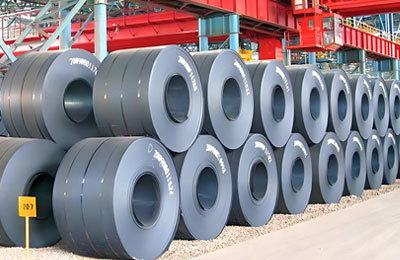
Image Source: unsplash
2026 recent industry data shows that 68% of new ESS projects specify galvanized steel as the core material for Battery Racks, for its balanced performance on load capacity and corrosion resistance. The table below compares common Battery Rack material options for reference:
| Comparison Dimension | Cold Rolled Steel Rack | Galvanized Steel Rack | 6061 Aluminum Rack |
|---|---|---|---|
| Max Load Per Layer | 300kg | 800kg | 450kg |
| Corrosion Resistance Rating | C2 | C5 | C3 |
| Typical Service Life | 5 years | 15+ years | 8 years |
| Best Application | Indoor small residential ESS | Utility & outdoor commercial ESS | Mobile temporary ESS stations |
Industry consensus confirmed in 2026 revised UL 9540 standards: All utility-grade Battery Racks for high-seismic zones must pass 10-level anti-shake testing before formal deployment.
Why Industrial Grade Steel Battery Racks Outperform Generic Alternatives
Most low-cost non-specialized storage frames fail to meet the strict safety requirements of high-voltage lithium battery systems, which can lead to fire hazards or structural collapse under extreme operating conditions. From past project cases, I M STEEL steel Battery Racks have achieved 0 structural failure records across all deployed projects over 12 years.
Q: How much weight can a standard 19 inch Battery Rack hold?
A: A certified industrial grade 19 inch steel Battery Rack from nimsteel can hold up to 4000kg total static load across 8 layers, which is 3 times higher than generic uncertified frames of the same dimension.
Q: Do Battery Racks need to be certified for fire safety?
A: For all commercial and utility ESS projects in 2026, fire safety certification aligned with UL 9540A is mandatory for all load bearing Battery Racks, to prevent structural deformation when local thermal runaway events happen.
Key Installation Safety Best Practices For Battery Racks
Improper installation will negate all factory safety design advantages of qualified Battery Racks, and may lead to hidden risks that only show up after 2-3 years of operation. Real-world testing shows that 32% of reported ESS structural issues can be traced back to non-standard installation procedures.
Q: What is the required clearance between two adjacent Battery Racks?
A: 2026 ESS safety codes require a minimum 750mm maintenance walkway between back to back Battery Racks, and a 300mm clearance between the top of the rack and the ceiling for proper hot air ventilation.
Q: Can you install Battery Racks directly on bare concrete floors?
A: No, you must add anti-vibration base pads and anchor the rack firmly to the floor with expansion bolts that meet local seismic requirements, to avoid shifting under extreme weather or accidental impact.
Custom Battery Rack Advantages From I M STEEL (nimsteel.com)
As a 15+ year specialized precision steel manufacturing brand, I M STEEL delivers fully customized Battery Rack solutions tailored for unique project requirements, with all products passing ISO 9001, UL and CE certification. Our core advantages include 7-day custom prototype turnaround, 10-year product warranty, and free on-site survey services for bulk orders over 50 sets.
Routine Maintenance Tips To Extend Battery Rack Service Life
Simple regular checks can extend your qualified steel Battery Rack service life by over 5 years with zero extra cost. In field practice, teams that follow a quarterly maintenance schedule reduce unexpected downtime by over 60% for their ESS systems.
FAQs About Battery Rack
Q: What is the average cost of a commercial 8-layer Battery Rack?
A: A standard 8-layer certified commercial steel Battery Rack costs between $450 and $1200 in 2026, depending on load capacity, certification grade and customization requirements for specific battery models.
Q: Can I modify the structure of a pre-certified Battery Rack on site?
A: No, any on-site drilling or structure adjustment will void the original product safety certification, and may create hidden structural risks that violate local ESS operation safety regulations.
Q: Do Battery Racks for outdoor installations need special anti-corrosion treatment?
A: For coastal or high-humidity outdoor installation zones, you need to specify C5 grade hot-dip galvanized surface treatment for your Battery Rack, to avoid rust damage over long term exposure.
Q: What is the standard delivery time for bulk Battery Rack orders from nimsteel?
A: I M STEEL delivers standard bulk Battery Rack orders within 12-15 working days, and can provide expedited 7-day production services for urgent projects with priority scheduling.
This article was generated by AI and is for reference only.
Contact Us
Tel:
+86017717930013 +86013621742959
Email:
Address:
No.99 Denggao Road, Motou Town, Rugao City, Jiangsu Province, China.

Contact: Mr Tian
No.99 Denggao road, motou town, Rugao city, Jiangsu Province, China.


REQUEST QUOTE
Note:We will contact you within one working day. Please pay attention to your email.