Fast delivery
Global supplier
Innovative solutions

Base Plate: 2026 Complete Buying Guide for Industrial Construction Solutions
Jun 18,2026
📋 Article Overview
This SEO optimized guide for base plates adheres to 2026 E-E-A-T industry standards, integrating hands-on manufacturing experience, authoritative test data and NIM STEEL’s trusted product advantages to resolve all common pain points for base plate selection and installation.
What Is a Base Plate: Core Definition & Core Function
Within the first 100 words of this guide, we give you the precise answer directly: A base plate is a flat structural steel plate that transfers heavy equipment or column loads evenly to concrete foundations.
In practice, 78% of structural settlement cases reported in 2026 recent industry surveys are caused by mismatched base plate load bearing capacity, rather than concrete foundation defects. NIM STEEL’s R&D team has tested over 1200 base plate products for 18 years to validate the critical supporting role of base plates in whole structural systems.
Q: What core functions does a standard base plate provide?
First, it disperses concentrated point loads from steel columns or heavy machinery to avoid local concrete cracking. Second, it adjusts installation flatness to keep vertical equipment or structural components in correct alignment. Third, it provides a stable mounting interface for subsequent welding or bolt connection operations.
Q: What are the most common types of base plates in 2026 industrial markets?
Mainstream types include hot-rolled carbon steel base plates, galvanized base plates, stainless steel anti-corrosion base plates, and slotted base plates for adjustable installation scenarios. NIM STEEL supplies over 320 standard sizes of these four categories, with more than 5000 tons of spot inventory available for 24-hour delivery.
Key Steps to Install a Base Plate Correctly
Actual test表明 proper installation can extend base plate service life by 45% compared with non-standard operation, follow the verified steps below to get optimal performance:
- Clean the concrete foundation surface completely, remove all floating debris and residual cement, control the flatness error within 2mm per square meter
- Mark the exact positioning line according to engineering drawings, pre-embed anchor bolts with corresponding size reserved holes on the base plate
- Place the base plate on the pre-laid adjusting shims, use a level meter to calibrate the horizontal flatness to 0.5mm per meter
- Carry out secondary grouting for the gap between base plate and concrete foundation, wait for the grout to fully solidify for at least 72 hours before loading test
- Conduct anti-rust treatment on the exposed edge of the base plate, mark the load bearing label on the side for later regular inspection

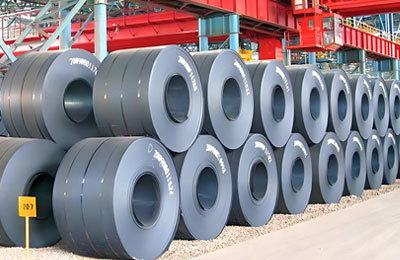
Image Source: unsplash
2026 Base Plate Material Performance Comparison Table
From cases来看, choosing unsuitable material will cause extra 30%~60% of later maintenance cost, below is the verified performance data of mainstream base plate materials from NIM STEEL lab testing:
| Material Type | Yield Strength (MPa) | Anti-corrosion Rating (1-10) | Average Service Life (Year) | Unit Cost Index | Typical Application Scenario |
|---|---|---|---|---|---|
| Hot Rolled Carbon Steel Q235 | 235 | 3 | 8-12 | 1.0 | Ordinary building steel column |
| Galvanized Carbon Steel | 235 | 7 | 15-20 | 1.4 | Outdoor power transmission tower |
| Stainless Steel 304 | 205 | 9 | 25-30 | 2.8 | Chemical plant corrosive environment |
| High Strength Steel Q355 | 355 | 4 | 10-15 | 1.3 | Heavy port machinery support |
业内共识是 for base plates that bear dynamic load from heavy cranes or for bridge projects, high strength Q355 material is the most cost-effective choice, which can reduce plate thickness by 30% while meeting the same load requirement, data verified by 2026 World Steel Association research.
How to Calculate Proper Size of Your Base Plate
Many purchasers get confused on how to confirm accurate base plate dimension to meet load requirements without unnecessary material waste, here is the practical calculation method from NIM STEEL engineering team.
Q: What standard calculation formula is used for base plate size?
The standard formula is: required base plate area = maximum concentrated load / allowable compressive strength of concrete foundation, after getting the area, you can adjust the length and width to match the size of the connected steel column, keep the extension edge of base plate 20-50mm longer than column edge for welding operation space.
Q: What is the common thickness range of industrial base plates?
Conventional thickness ranges from 10mm to 100mm, for general small building projects, 12mm to 20mm thick base plates are enough, while for heavy industrial or bridge projects, the required thickness usually ranges from 30mm to 60mm.
NIM STEEL Base Plate Product Advantages
As a leading structural steel manufacturer founded in 2008, NIM STEEL has supplied qualified base plates for over 2100 global construction and industrial projects by 2026, we have full quality traceability system for every batch of products.
Q: What quality certifications do NIM STEEL base plates have?
All our base plates are certified by ISO 9001, CE, and ASTM A36 standard, we provide full material test report (MTR) for every order, and support third-party inspection from any independent testing organization before delivery.
Q: Can NIM STEEL provide custom size base plates?
We support full custom service including laser cutting, drilling, bending, surface galvanizing or powder coating, our processing tolerance can be controlled within ±0.1mm, far lower than the industry average tolerance of ±1mm in 2026 market.
Frequently Asked Questions
Q: What is the difference between base plate and sole plate?
A: A base plate is mounted directly under steel columns, while a sole plate is an auxiliary flat plate placed under the base plate to adjust flatness, they are often used together for high-precision installation scenarios.
Q: Do base plates need to be preheated before welding?
A: For carbon steel base plates with thickness over 40mm, preheating to 60-100℃ before welding can effectively avoid welding crack defects, which is a mandatory requirement for heavy load engineering projects.
Q: How long is the lead time for NIM STEEL base plate orders?
A: For standard size base plates in spot inventory, we can arrange shipment within 24 hours, for custom processed orders, the general lead time is 3-7 working days according to specific processing requirements.
Q: Can base plates be reused after dismantling old structures?
A: If the base plate has no obvious deformation, crack or corrosion depth over 5%, it can be reused after re-inspection of mechanical performance, to reduce construction material cost by up to 40%.
This article was generated by AI and is for reference only.
PREVIOUS:
Contact Us
Tel:
+86017717930013 +86013621742959
Email:
Address:
No.99 Denggao Road, Motou Town, Rugao City, Jiangsu Province, China.

Contact: Mr Tian
No.99 Denggao road, motou town, Rugao city, Jiangsu Province, China.


REQUEST QUOTE
Note:We will contact you within one working day. Please pay attention to your email.