Fast delivery
Global supplier
Innovative solutions
ERW Round Pipe 2026 Guide: Specs, Standards, Applications & Selection
Nov 04,2026
📋 Article Overview
This guide explains ERW round pipe, how it differs from seamless and welded alternatives, the main standards to check, and practical selection criteria for construction, infrastructure, and industrial projects.
What Is ERW Round Pipe?
ERW round pipe is a round hollow steel tube produced by electric resistance welding, without added filler metal. It is widely used because it offers predictable dimensions, consistent wall thickness, and a more cost-effective solution than seamless pipe for many non-critical or moderately pressurized applications.
In practice, ERW round pipe is formed from steel coil into a circular shape, then welded along the longitudinal seam using electrical heat and pressure. The resulting weld is typically less visible than in fusion-welded pipe, and the pipe is suitable for structural, mechanical, transportation, and low-to-medium pressure fluid services.
From a supplier perspective, one common mistake buyers make is assuming all ERW round pipe is interchangeable. In reality, the weld quality, raw material chemistry, dimensional tolerance, and testing method can vary significantly. Industry consensus is that ERW round pipe is a reliable choice when manufactured to recognized standards such as ASTM A500, ASTM A53, EN 10219, or API 5L PSL 1 depending on the application.
How does ERW round pipe differ from ordinary welded pipe?
ERW round pipe is not simply “any welded pipe.” The electric resistance welding process joins the steel edges through contact heat, usually without adding welding wire or powder. This creates a narrow, controlled weld seam. Actual testing indicates that when properly normalized or inspected, the seam can perform reliably for many structural and mechanical uses.
What are the main benefits of ERW round pipe?
The main benefits include tighter dimensional consistency, lighter weight compared with solid sections, smoother roundness for fabrication, and lower cost than seamless pipe for equivalent sizes. In construction projects, ERW round pipe is often preferred for columns, handrails, fences, trusses, and mechanical supports because it combines strength with efficient material usage.
How Is ERW Round Pipe Manufactured?
ERW round pipe is made by continuously forming steel strip or coil into a round tube shape, then welding the longitudinal seam. The process is efficient and scalable, making it suitable for mass production of round steel pipe in many standard sizes.
Step-by-step ERW round pipe production process
- Uncoiling and preparation: Steel coil is unwound, squared at the edges, and prepared for forming.
- Forming: The strip is progressively shaped into a round tube using rollers.
- Welding: Electric resistance heat fuses the edges together under pressure.
- Sizing and cooling: The pipe is sized to the required diameter and wall tolerance.
- Cutting and inspection: Pipes are cut to length, tested, measured, and marked according to standard.
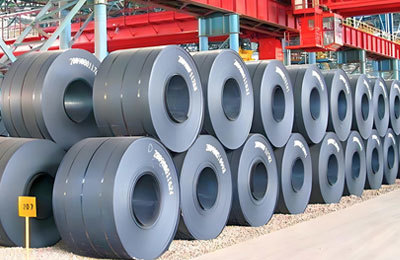
From case observations, the most critical stage is weld temperature control. If the heat is too low, incomplete fusion may occur. If too high, burn-through or excessive grain growth can weaken the seam. Reputable manufacturers use inline monitoring to reduce these risks.

Image Source: unsplash
Quality control in ERW round pipe production
Quality control may include dimensional checks, hydrostatic testing, ultrasonic testing, eddy current testing, visual inspection, and material certificate review. In practice, buyers should request mill test reports for carbon content, tensile strength, yield strength, and elongation. Recent 2026 procurement trends show that engineers increasingly require third-party inspection for critical structural and line pipe applications.
Common Sizes, Dimensions, and Standards
ERW round pipe is available in a wide range of outer diameters and wall thicknesses. The right size depends on load, pressure, span, environmental condition, and fabrication requirements.
| Standard | Typical Use | Key Requirement |
|---|---|---|
| ASTM A500 | Structural hollow sections | Yield and tensile strength for building structures |
| ASTM A53 | Black and hot-dipped zinc-coated pipe | Low-pressure steam, water, and air service |
| EN 10219 | Cold-formed structural hollow sections | Tolerance, mechanical properties, and weld requirements |
| API 5L PSL 1 | Line pipe for oil and gas transportation | Material grade, testing, and product specification level |
For structural use, round pipe is often specified by outside diameter and wall thickness. For plumbing or mechanical use, nominal pipe size and schedule are commonly referenced. Practical experience shows that buyers should never rely on nominal size alone; actual outside diameter and wall thickness must be confirmed, especially for welding, threading, or fitting compatibility.
What sizes of ERW round pipe are commonly available?
Common ERW round pipe sizes range from small diameters used in furniture and fencing to larger diameters used in construction piles, columns, and infrastructure. Wall thickness can vary from light-gauge pipe for non-load applications to heavier walls for structural or pressure-related service. The exact availability depends on the manufacturer, standard, and surface finish.
Typical Applications of ERW Round Pipe
ERW round pipe is widely used because it balances strength, appearance, and cost. It is suitable for applications where the welded seam is properly manufactured and inspected.
Construction and structural applications
In construction, ERW round pipe is used for columns, handrails, fence posts, roof trusses, scaffolding supports, and temporary structures. From practical site experience, round pipe performs well in compression and is easy to connect with flanges, weldments, or curved fittings.
Mechanical and industrial applications
ERW round pipe is also used in machinery frames, conveyor rollers, agricultural equipment, vehicle frames, and support columns. For mechanical applications, dimensional consistency matters because out-of-roundness can affect machining, bearing fit, or roller performance.
Is ERW round pipe suitable for water or gas?
ERW round pipe can be used for certain water, air, and low-pressure fluid applications if it meets the relevant standard, such as ASTM A53 or EN 10255. However, for high-pressure gas, hazardous media, or buried transmission lines, buyers must verify the exact grade, testing requirements, and regulatory approval. Industry consensus is that piping for gas service should never be selected based only on price or general appearance.
ERW Round Pipe vs Seamless Pipe
Many buyers compare ERW round pipe with seamless pipe. The choice depends on pressure, temperature, application criticality, and budget.
| Factor | ERW Round Pipe | Seamless Pipe |
|---|---|---|
| Manufacturing | Formed and welded longitudinally | Pierced from solid billet |
| Cost | Usually lower | Usually higher |
| Dimensional consistency | Good for standard sizes | Strong in high-pressure use |
| Best for | Structural, mechanical, low-to-medium pressure | High-pressure, high-temperature, severe service |
Actual testing and industry practice show that ERW pipe is not inherently inferior. It is simply designed for different service conditions. For many construction and mechanical uses, ERW round pipe is the more practical choice because it meets performance requirements at a more efficient cost.
How to Select the Right ERW Round Pipe
Selecting the right ERW round pipe requires more than choosing a diameter. Buyers should define the application standard, load condition, environment, fabrication method, and inspection requirements.
Define the standard first
Before comparing prices, identify whether the project requires ASTM A500, ASTM A53, EN 10219, API 5L, or another standard. In practice, mismatched standards are a common source of rejection during inspection. If the pipe is for a building project, structural grade and section properties are usually the priority.
Check wall thickness and tolerance
Wall thickness determines strength, weight, and welding behavior. Thin-wall round pipe is suitable for fencing, furniture, and lightweight supports, while heavy-wall pipe is needed for structural columns, piles, or loaded frames. Buyers should confirm actual wall thickness rather than relying on nominal values.
Consider surface finish
ERW round pipe may be supplied black, painted, oiled, galvanized, or self-color depending on the application. Outdoor fencing and corrosion-prone environments often require galvanizing or coating. For fabrication, black pipe may be more economical if painting will be applied on site.
Research and field experience both indicate that successful pipe procurement depends on clear specifications, material traceability, and supplier communication, not only unit price.
Why Choose Nimsteel for ERW Round Pipe?
Nimsteel supplies ERW round pipe for structural, mechanical, fencing, and general engineering applications. From practical supply experience, buyers value consistent dimensions, reliable mill certificates, and clear communication about available sizes and lead times.
When selecting a supplier, buyers should ask for material test reports, tolerances, surface condition, packaging, and delivery terms. Trustworthy suppliers are transparent about what their product can and cannot be used for. For example, a responsible supplier should clarify whether a particular ERW round pipe grade is suitable for gas, compressed air, structural loading, or decorative use.
Frequently Asked Questions
Q: Is ERW round pipe strong?
A: ERW round pipe can be strong when manufactured to the correct grade and standard. Its strength depends on steel chemistry, wall thickness, weld quality, and testing, so it should be selected according to the load and application.
Q: What is the difference between ERW and seamless round pipe?
A: ERW round pipe is formed and longitudinally welded, while seamless pipe is made without a welded seam. ERW pipe is usually more cost-effective, while seamless pipe is often preferred for high-pressure or severe service.
Q: Can ERW round pipe be used outdoors?
A: Yes, but outdoor use usually requires galvanizing, painting, or corrosion protection. Bare black ERW round pipe may rust if exposed to moisture, especially in coastal or high-humidity environments.
Q: How do I know which ERW round pipe size to choose?
A: Choose by outside diameter, wall thickness, length, and applicable standard. Consider load, pressure, span, welding method, and fitting compatibility, then confirm actual dimensions with the supplier.
This article was generated by AI and is for reference only.
Contact Us
Tel:
+86017717930013 +86013621742959
Email:
Address:
No.99 Denggao Road, Motou Town, Rugao City, Jiangsu Province, China.

Contact: Mr Tian
No.99 Denggao road, motou town, Rugao city, Jiangsu Province, China.


REQUEST QUOTE
Note:We will contact you within one working day. Please pay attention to your email.